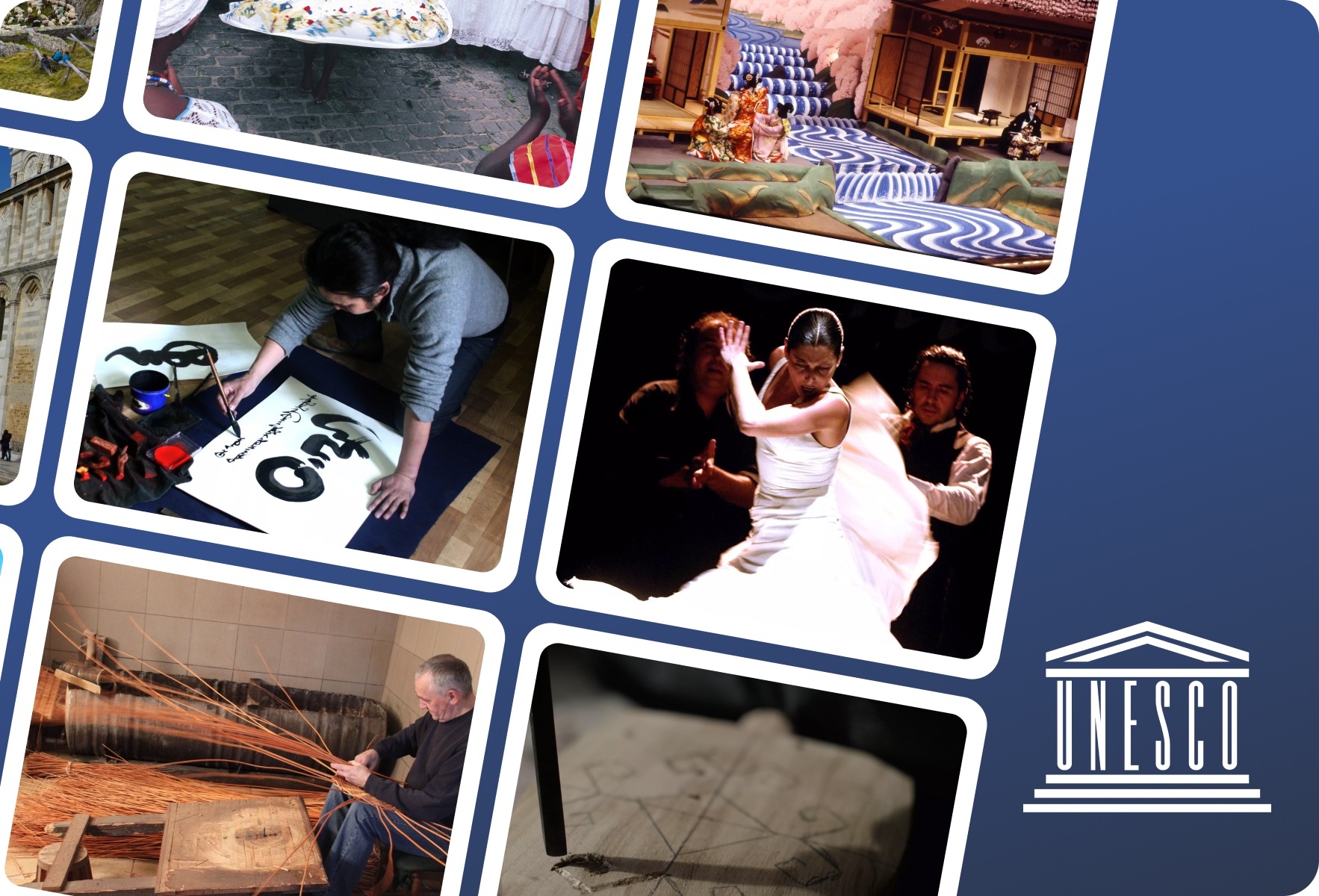
Unlike UNESCO's World Heritage List, which protects physical places - monuments, natural sites - Intangible Cultural Sites (ICS) protects living heritage: practices, knowledge, skills, and the objects and cultural spaces tied to them, which communities themselves recognize as part of their identity. The convention was adopted by UNESCO in 2003 and has been in effect since 2006. It covers oral traditions, performing arts, social practices, rituals and festive events, knowledge and practices concerning nature and the universe, and traditional craftsmanship.
UNESCO maintains three lists: the Representative List of the Intangible Cultural Sites of Humanity (the largest, covering practices of broad cultural significance), the List of Intangible Cultural Sites in Need of Urgent Safeguarding (practices at risk of disappearing), and the Register of Good Safeguarding Practices (programs recognized as models for preserving heritage).
Inscribed practices range from French baguette-making and Haitian pumpkin soup, to Congolese rumba, Catalan human towers (castells), Vietnamese pottery-making, and Turkish stonework.
On our site, this list reflects the elements inscribed on these UNESCO lists.
Visit official Unesco list